



















Introduction
In Colombian para athletics and Deaf sport, every fraction of a second tells a story. It can reveal progress, confirm that a training strategy is working or identify the detail that still needs to be improved. For a group of elite Colombian sprinters, accurate timing has become an essential part of that process.
Since January 2026, national coach Alonso Mina and five athletes from Colombian para athletics and Deaf sport have integrated Freelap into their training. Using the Tx Pad Pro, Tx Junior Pro and FxChip BLE for standard timing and intermediate splits, they can measure performance with precision, analyze each session and prepare for competition with greater confidence.
Their disciplines, classifications and individual journeys may differ, but they share the same ambition: to understand their performance more clearly and keep pushing their limits.
Turning every training session into useful data
At elite level, a time is much more than a number. Repeated measurements help athletes and coaches compare sessions, monitor progress and make informed adjustments to starts, acceleration and speed endurance.
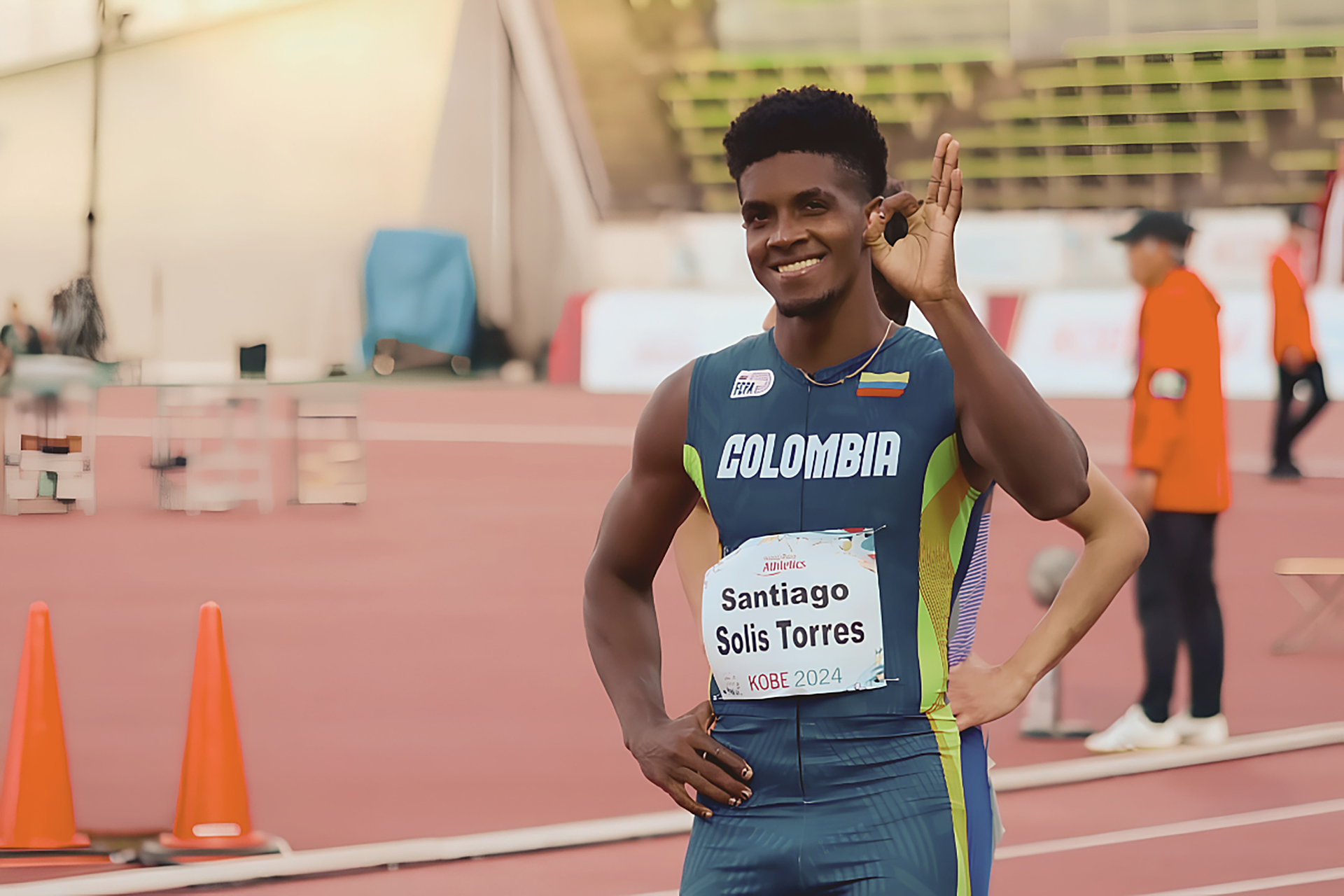
For Santiago Solís Torres, a T38 sprinter, Para Pan American silver medalist in the 100m and sixth-place finisher at the Paris 2024 Paralympic Games, reliable data is a foundation for continuous improvement.
“Freelap is a fundamental tool in my sports training, as it allows me to measure race times with great precision. Thanks to this technology, it is possible to track my performance in training sessions, analyze my progress and identify areas for improvement. Its use provides me with reliable and objective data, enabling more precise performance monitoring and contributing to more efficient preparation to achieve better results. I am confident that with its help, it will lead me to achieve great accomplishments.”
For Karol Bastidas, a T46 sprinter and two-time champion in the 100m and 200m at the 2025 Youth Parapan American Games in Chile, timing also gives meaning to the work behind every performance.
“With Freelap, I can measure my training times much more accurately, analyze each session and truly understand how I am running. Every time recorded represents hours of effort, discipline and dreams. My goal is not to compete against my limits, but to keep breaking them.”

Building confidence before competition
Objective data does more than measure physical performance. It can also provide reassurance. Knowing exactly where an athlete stands before an important event reduces uncertainty and helps turn preparation into confidence.
Luis Fernando Lara Rodallega, a T46 sprinter, finished fourth in the men’s 400m T47 final at the Paris 2024 Paralympic Games. He also won silver in the 100m and 400m at the 2026 South American Para Games. For him, Freelap has become part of the support system surrounding his performance.
“Freelap has given me something I didn’t have before in training: certainty. Being able to know my real times in every session allows me to arrive at international competitions better prepared and with the confidence of knowing exactly where I stand. Freelap is not just a stopwatch, it is part of my team.”

Making Los Angeles 2028 feel possible
For Julián Acosta Méndez, a T35 sprinter, junior Para Pan American silver medalist and Colombian record holder in the 400m, measuring progress has also changed the way he looks at his long-term goal.
“I am an athlete with big dreams, but since our coach introduced us to the new Freelap tool for our training on the road to the Los Angeles 2028 Paralympic Games, I no longer see it as an impossible dream; I see it as a possible goal, since my 100m times have improved exceptionally and the change has been noticeable.”

The road to a major championship is built one session at a time. Progress is rarely linear, but accurate and repeatable measurements allow athletes to recognize the improvements that might otherwise go unnoticed.
Supporting excellence across different sporting pathways
The training group also includes Gian Marco Andrade Mosquera, a Colombian Deaf sprinter and 100m world champion at Taipei 2024. He previously won silver in the 100m at the Caxias do Sul 2021 Deaflympics. Although Deaf sport has its own competition structure, the demand for precise performance analysis is just as high.
“Since I started using Freelap in my training, I have been able to measure my times with much more precision and confidence. It has allowed me to analyze each session, track my progress and make specific adjustments to improve my performance in the 100m. It is a very reliable tool, easy to use and essential for high-level training. Without a doubt, Freelap has been a great support in my preparation as an athlete.”

A clearer overview for the coach
For Alonso Mina, national coach of the group, the value of timing lies not only in the precision of an individual result, but also in the ability to follow each athlete over time. With consistent data, he can evaluate performances systematically and adapt his work to the needs of every sprinter.
“Freelap is a highly precise technological tool that allows us to evaluate every training session systematically, track each athlete’s individual performance percentages and monitor their progress. Our athletes have gained greater confidence in their results and in their ability to compete at the international level. As a coach, having this tool makes my work significantly more efficient.”

Precision in service of ambition
From national records and international medals to the ambition of Los Angeles 2028, each athlete is following a unique path. What unites the group is the determination to turn effort into measurable progress.
Freelap provides immediate, objective timing data, but the performances remain the result of the athletes’ commitment, the coach’s expertise and the work repeated day after day. Technology does not replace that process. It helps make it visible.