















Why the flying 30 m is an essential test
If you want to know how fast an athlete is truly capable of running – not just from the start, but once they reach maximum speed – the flying 30 m is one of the most relevant tests.
The principle is simple : the athlete builds momentum over 20 to 30 meters, then is timed over a 30-meter zone while already running at full speed.
This type of test provides more accurate data on maximum speed:
- in sprinting, it helps analyze the pure speed phase, beyond acceleration
- in American football, it helps isolate the high-speed portion of a test such as the 40-yard dash
- in soccer, rugby or team sports, it measures a speed closer to match situations, where athletes rarely
- sprint from a standing start
But this data only has value if the timing is reliable.
The problem with manual timing
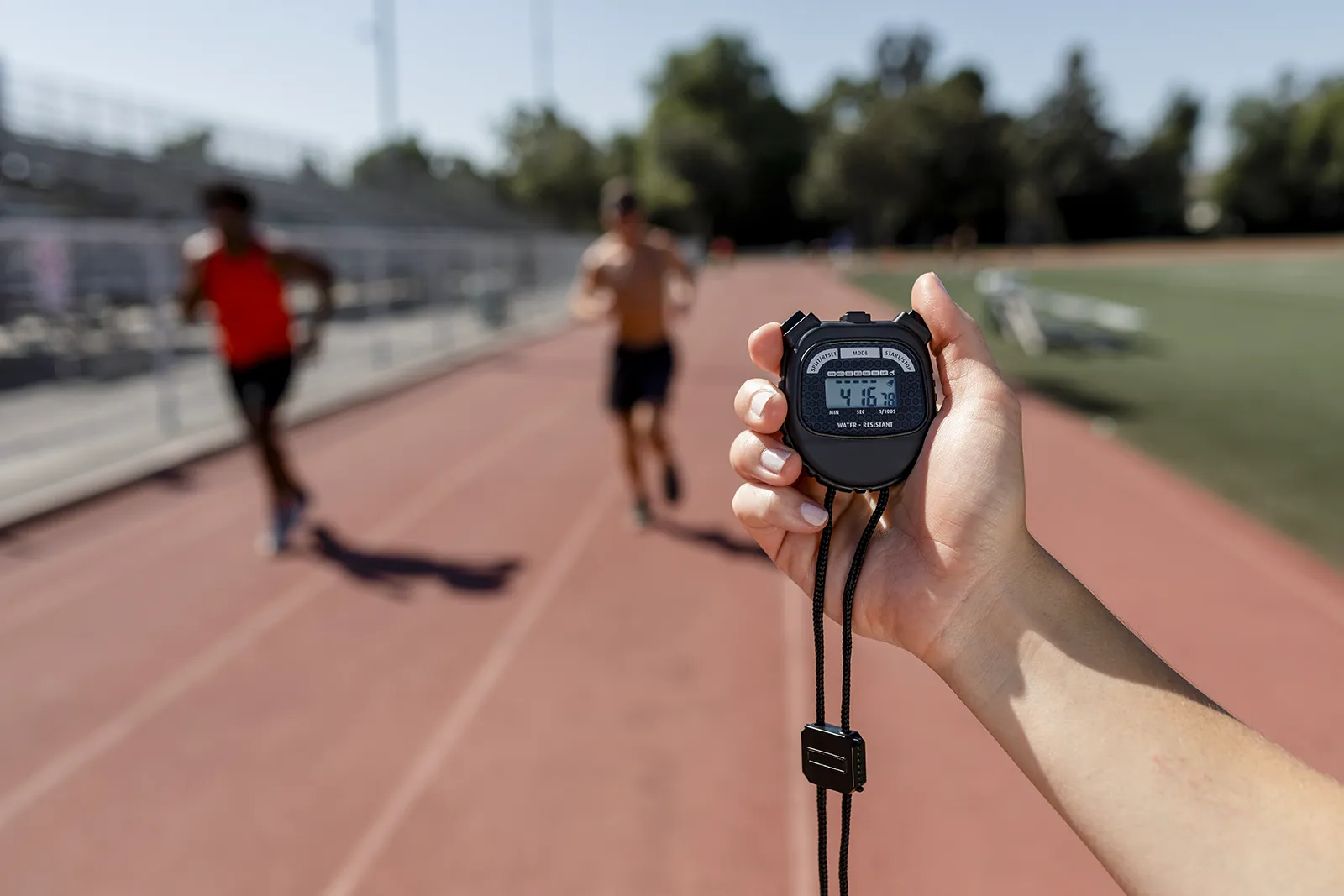 Timing a flying 30 m by hand is not accurate enough.
The improvements coaches are trying to measure are often a matter of just a few hundredths of a second. With a manual stopwatch, human error can easily distort the result. An error margin of two or three tenths of a second can completely change how a performance is interpreted.
Repeatability is also a problem : two coaches can time the same run and get two different results. In that case, it becomes difficult to compare sessions, track progress or provide truly useful feedback.
Laser timing gates : better, but not perfect
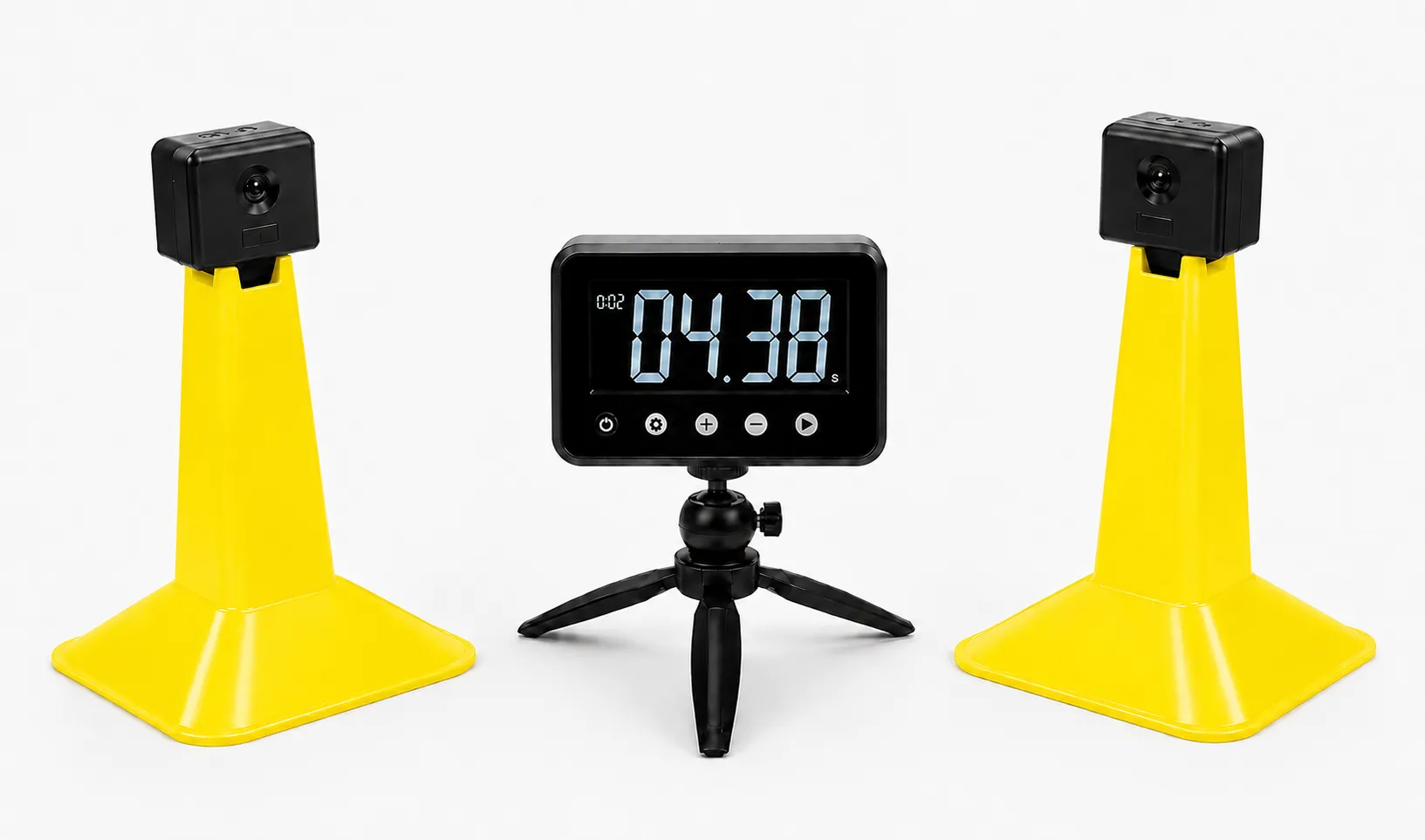 Laser systems are an improvement over manual timing. They automate triggering and reduce part of the human error.
But in the field, they remain imperfect.
An arm, knee or another body part can break the beam before the center of mass actually crosses the line. As a result, the time may be triggered too early. Setup also requires precision, time and constant attention to ensure that measurements remain consistent.
Laser systems can therefore be useful, but they do not always guarantee perfectly stable readings in real training conditions.
Photo finish : highly accurate, but not practical for everyday use
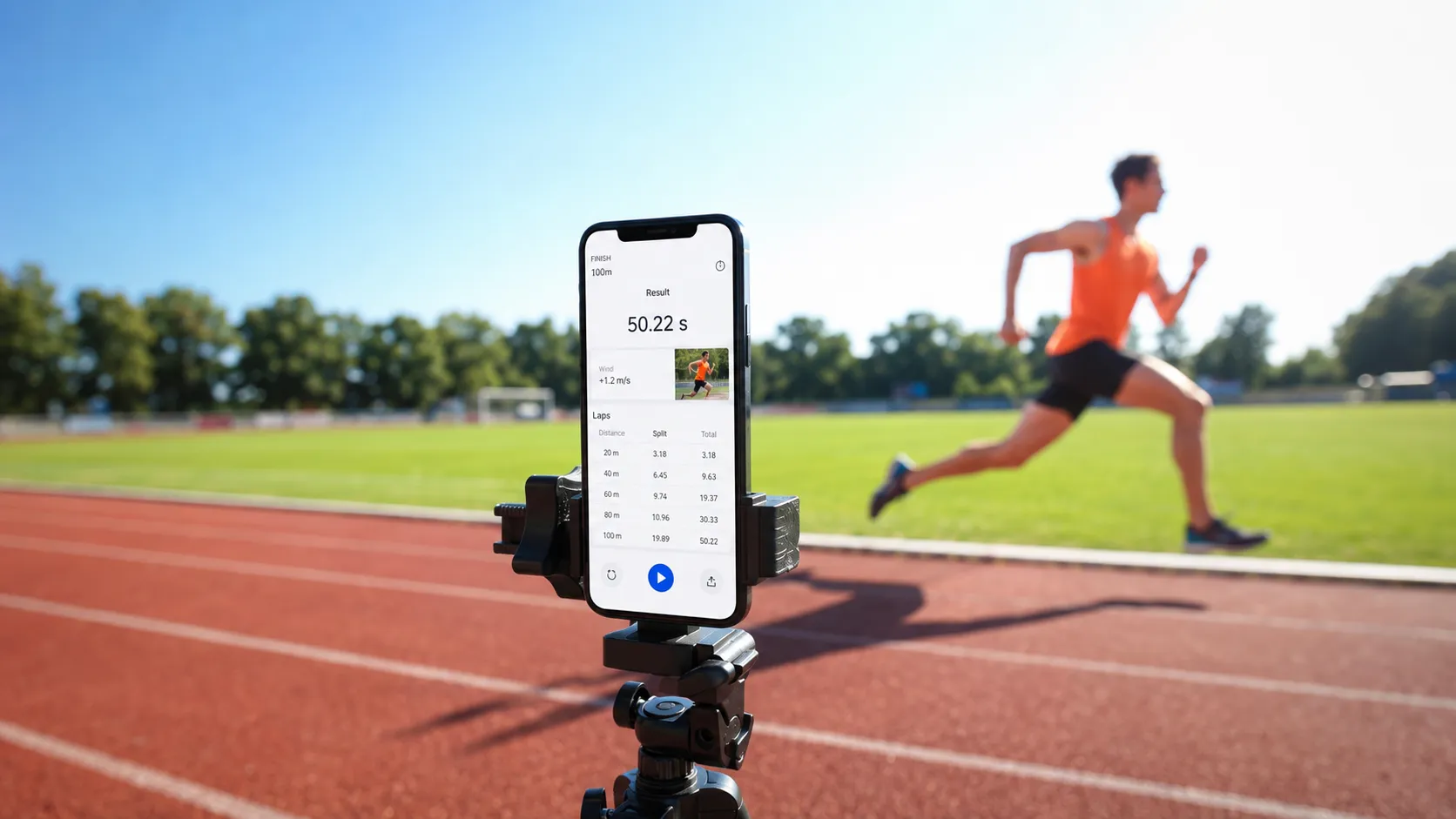 Photo-finish systems, like those used in official competitions, offer a very high level of precision. They are designed for situations where every thousandth of a second matters.
But this precision comes at a cost : expensive equipment, complex setup and heavier operation.
It is an excellent solution for competition, but much less suitable for a team training session on a Tuesday afternoon, with several athletes to test quickly.
What coaches really need
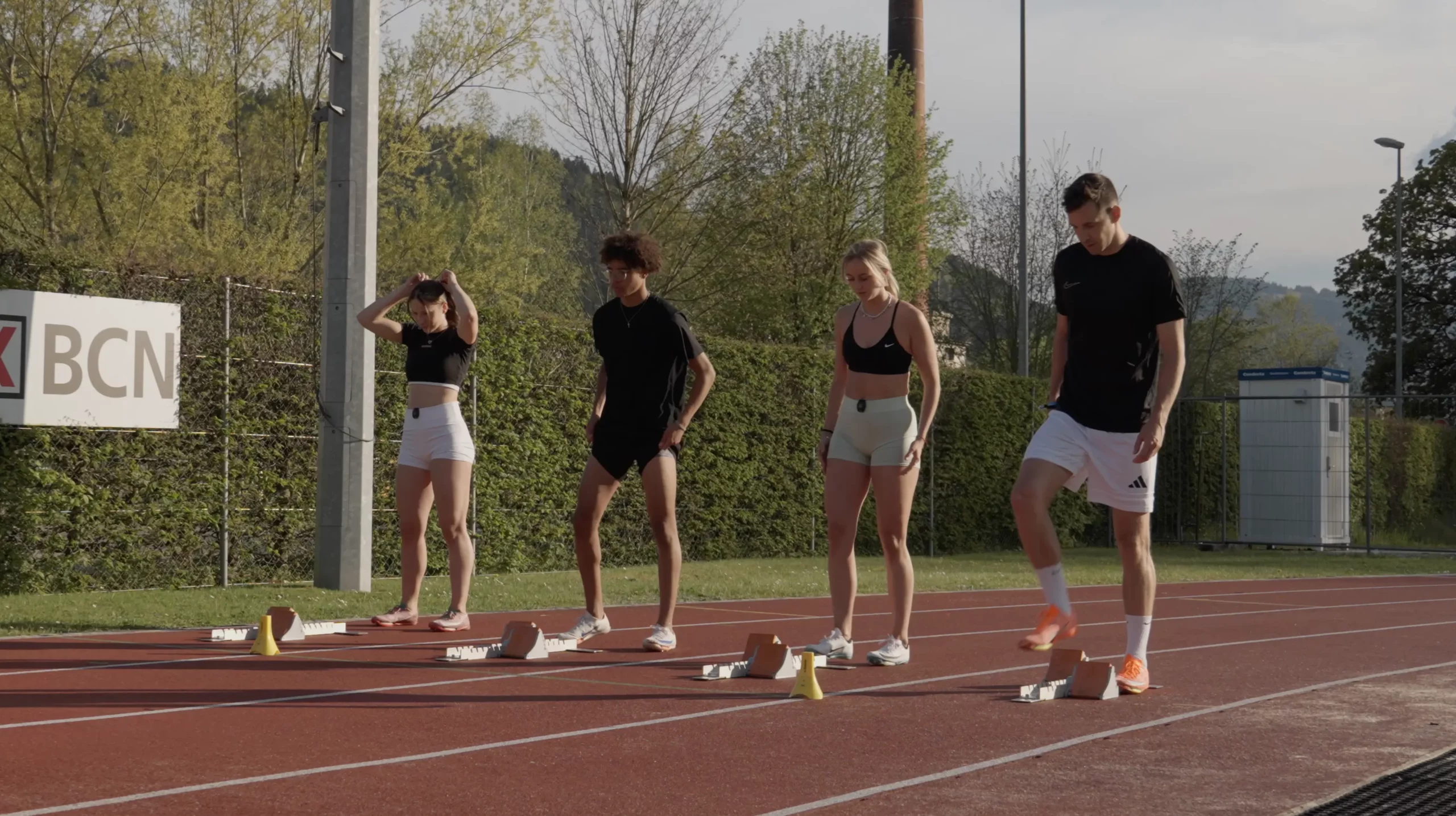
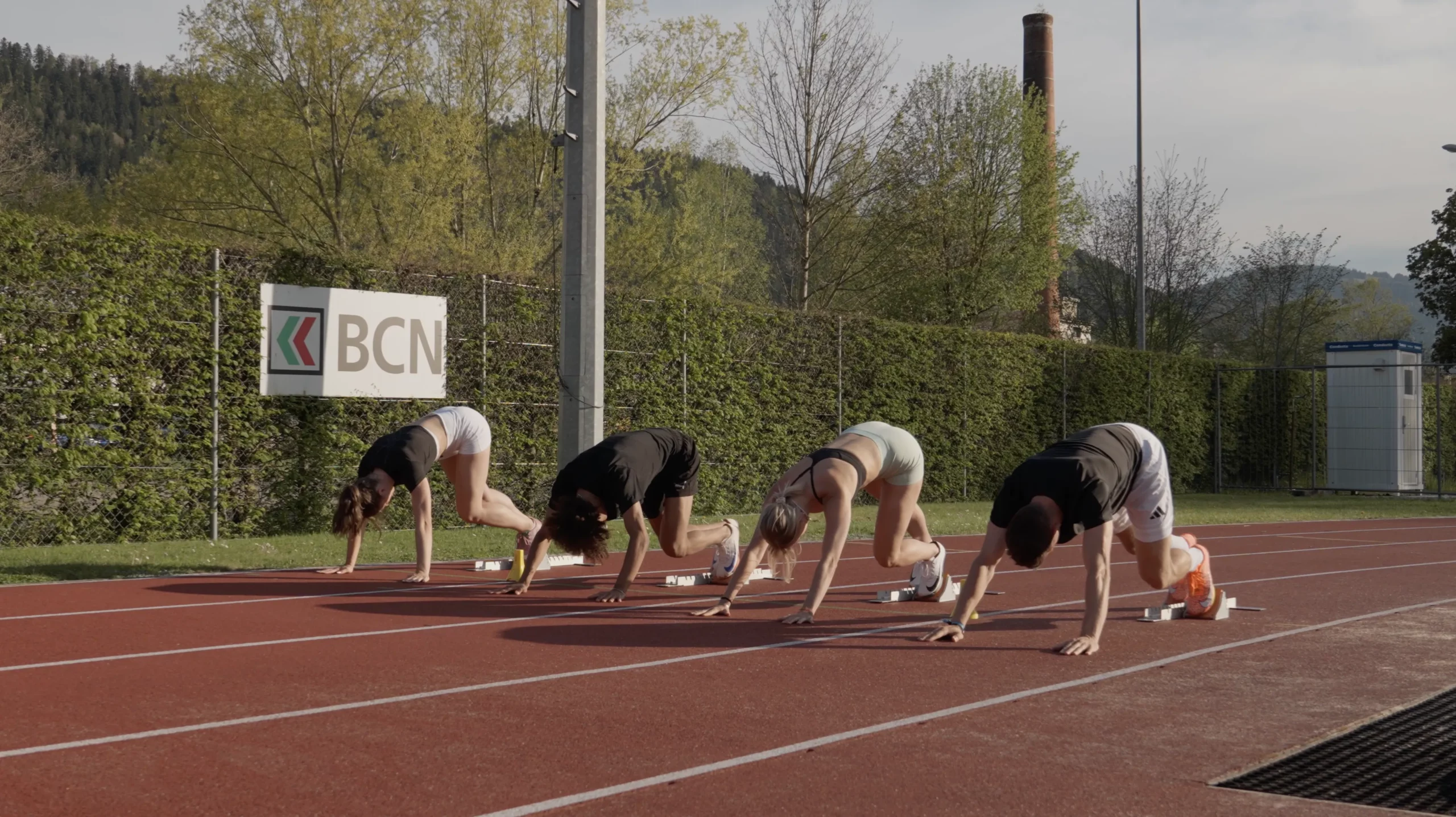
 In a training context, the goal is not necessarily to achieve laboratory-level precision. The goal is to obtain data that is :
- easy to collect
- accurate enough to track progress
- consistent from one week to the next
- easy to use with several athletes
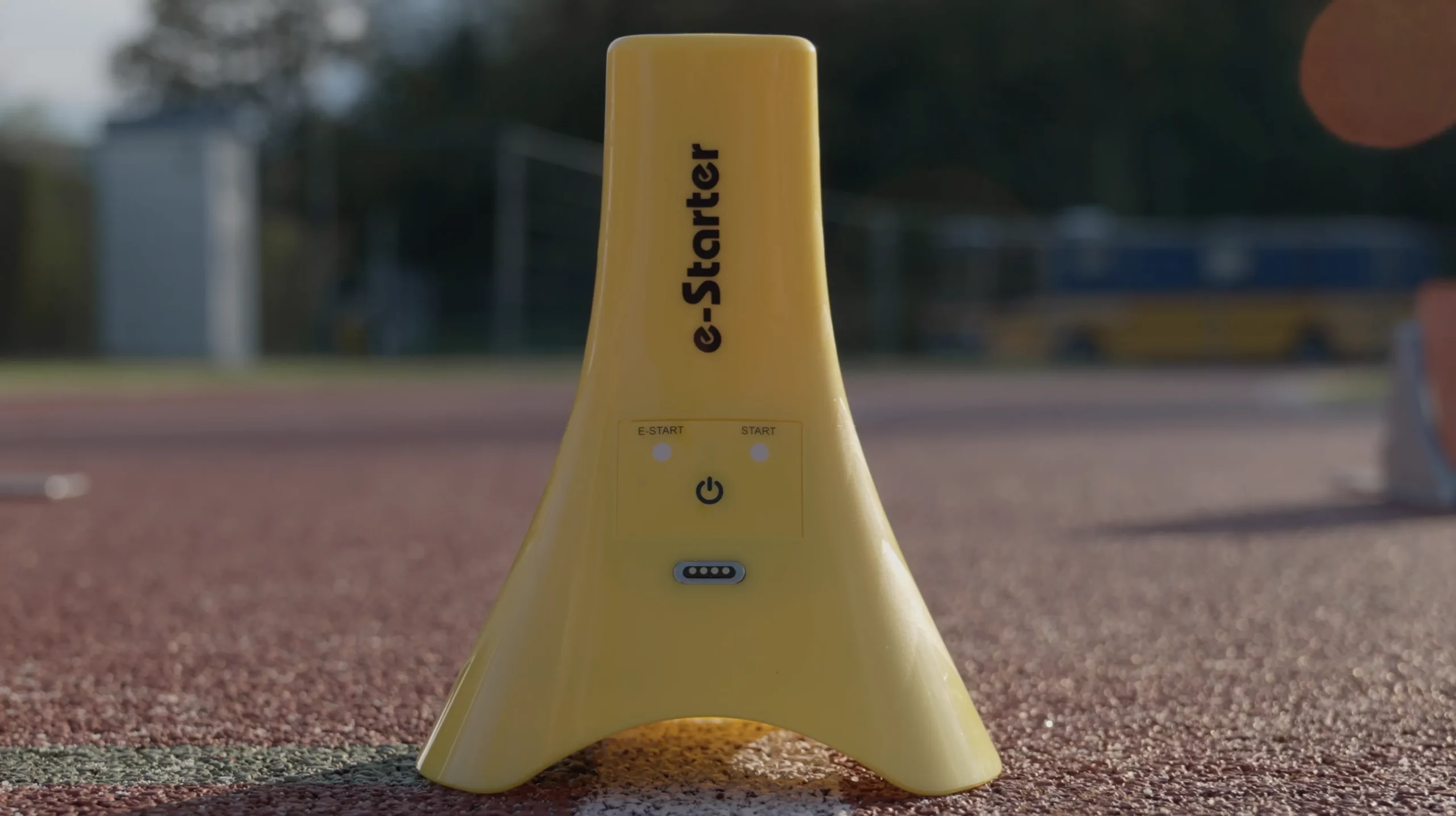
This is where chip-based timing systems, such as Freelap, provide a real answer.
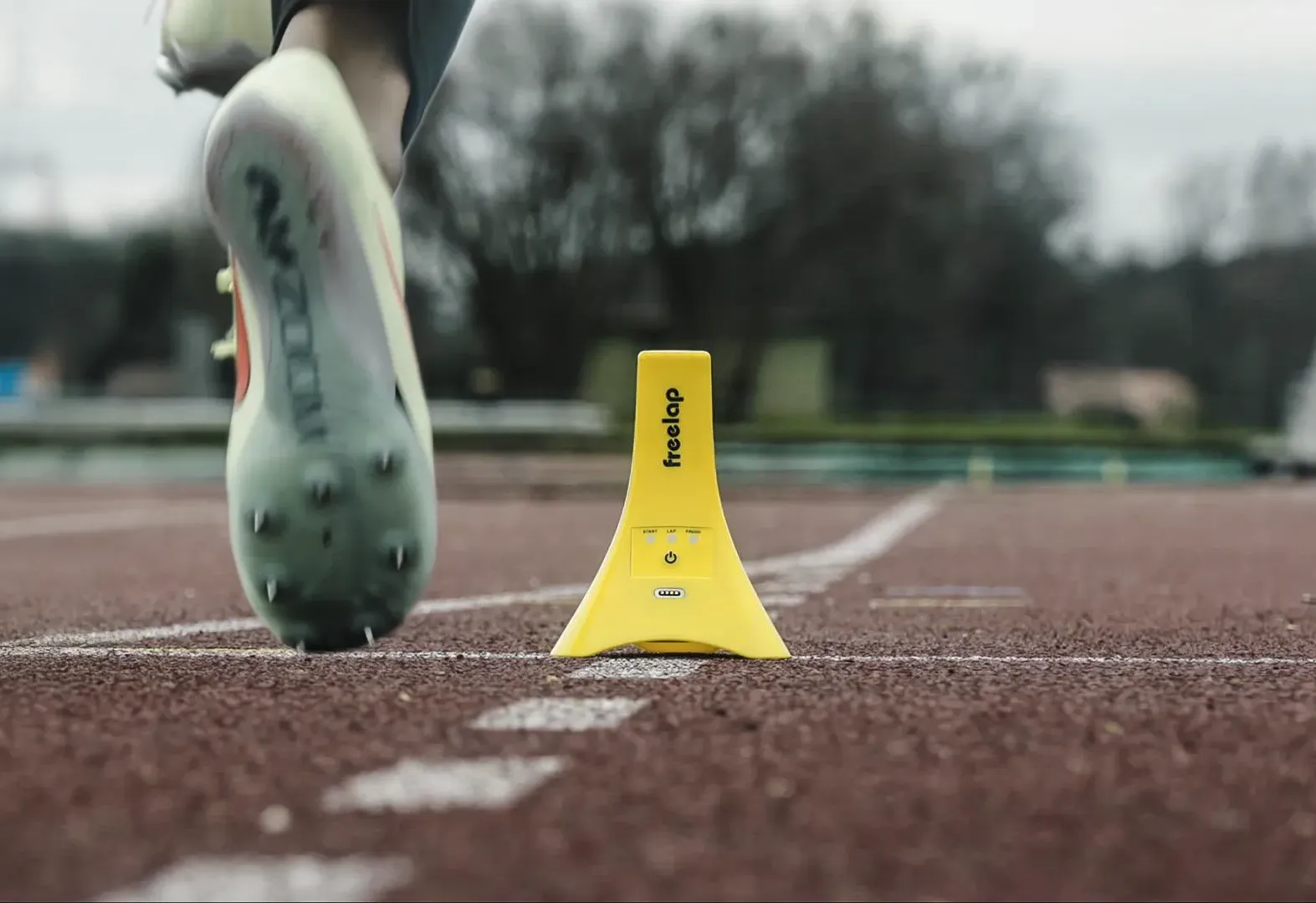
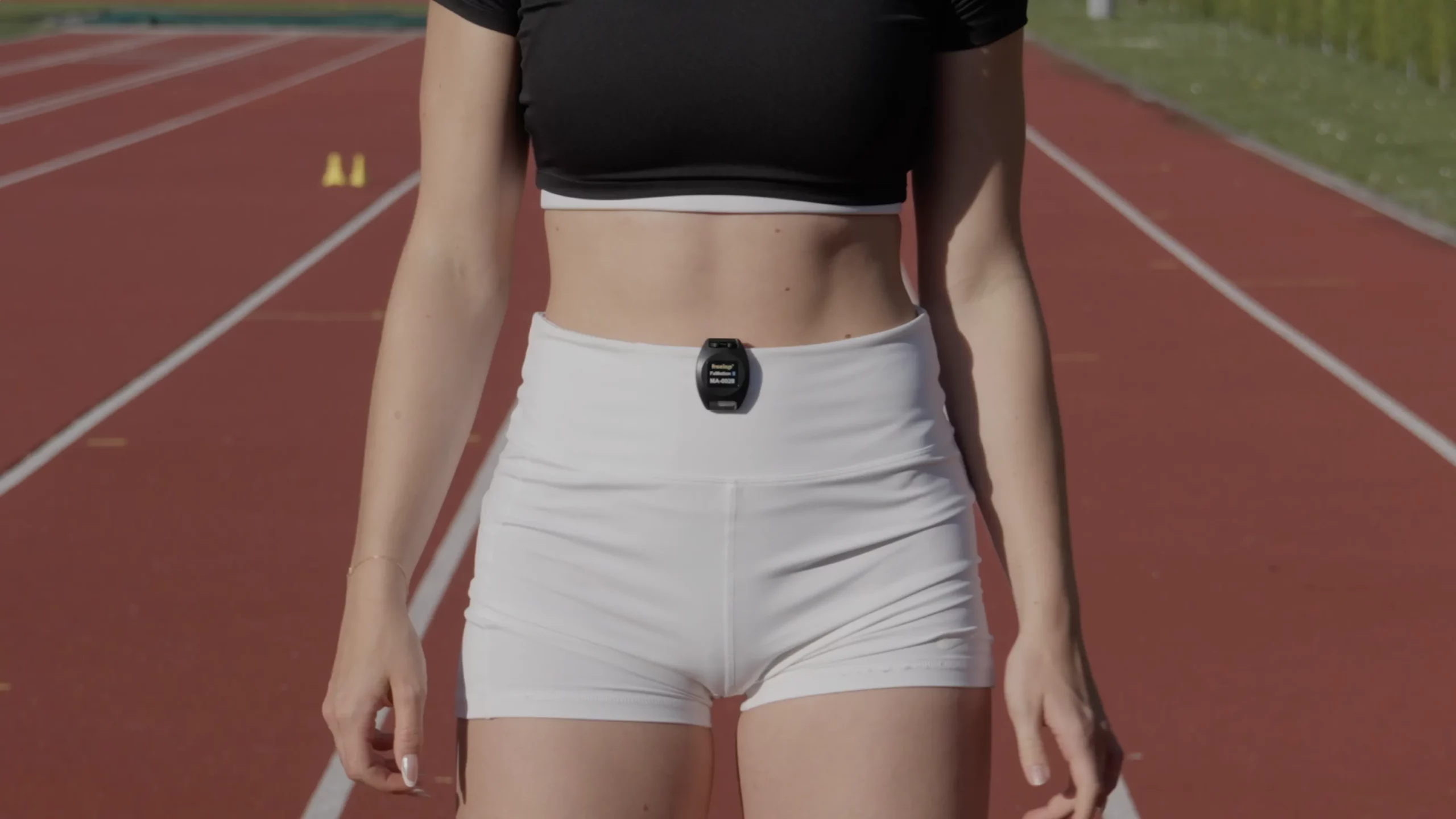
The chip is worn at the athlete’s waist. Timing is therefore triggered at hip level, not from a hand, arm, knee or head. This makes the measurement more consistent with the actual movement of the body.
How does a flying 30 m work with Freelap ?
With a Freelap system, setup is simple:
- Define your timed zone : 30 m, 20 m or another distance depending on your objective.
- The athlete wears a chip at the waist.
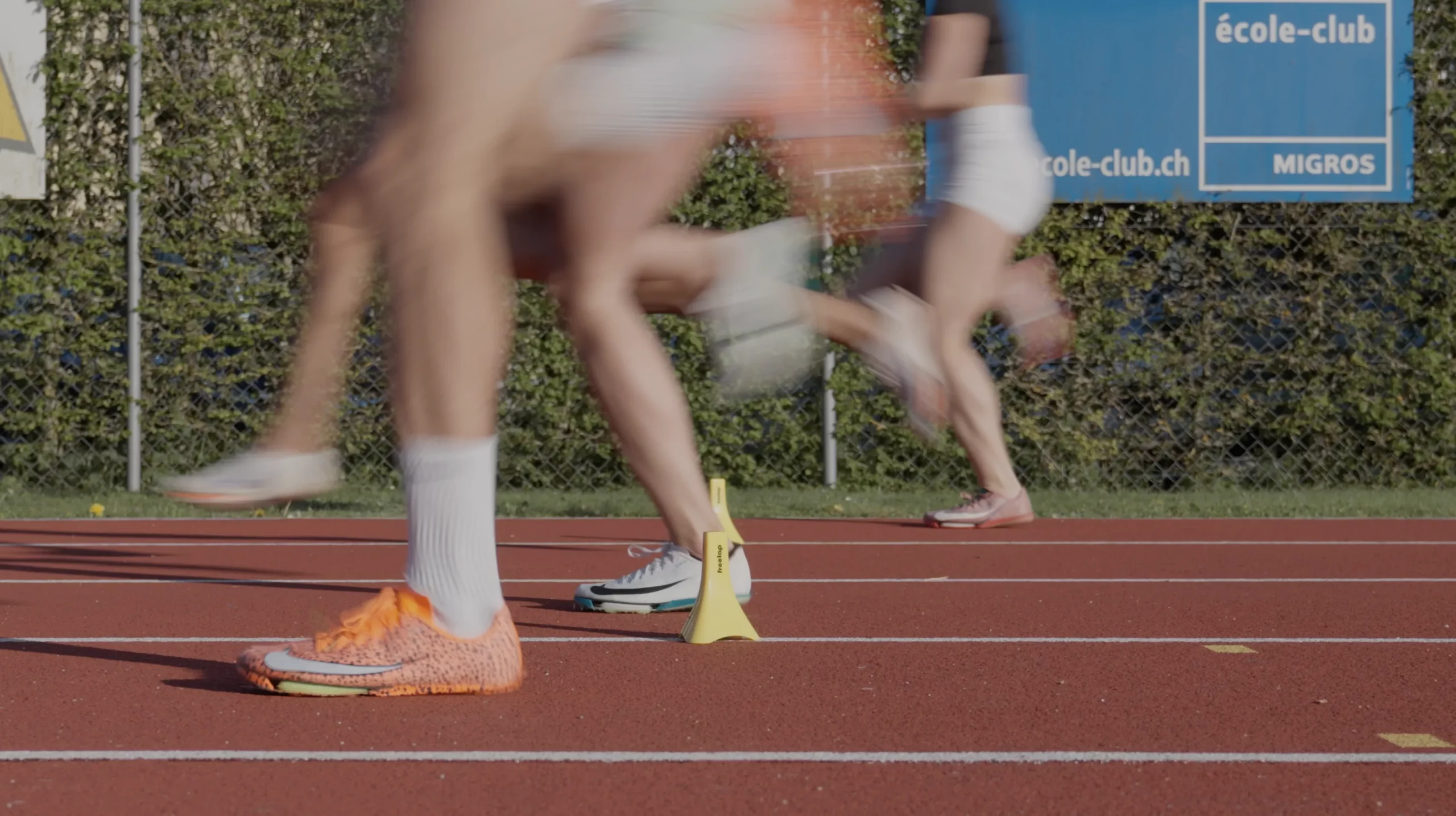
- The transmitters automatically trigger timing as the athlete passes.
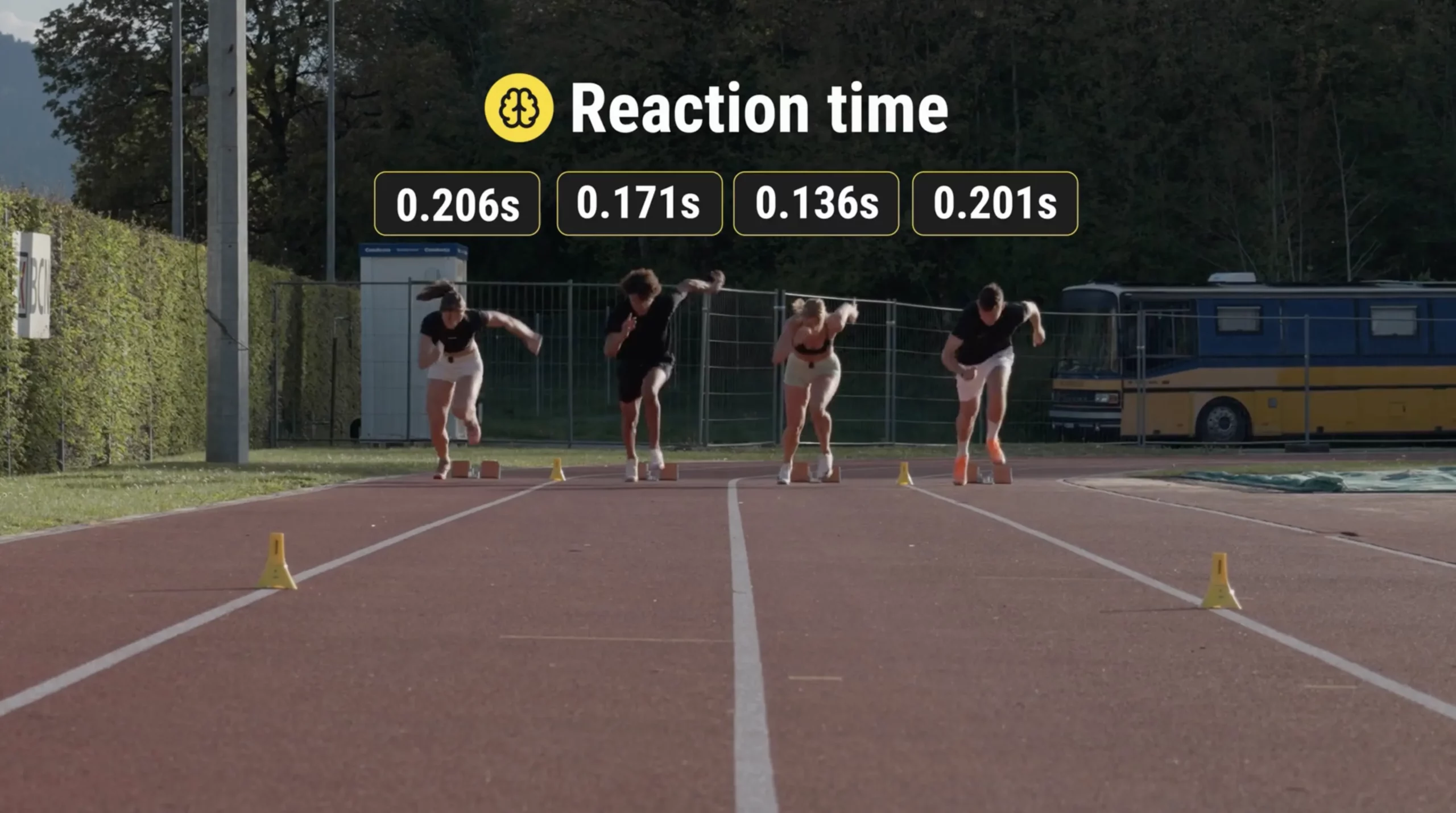
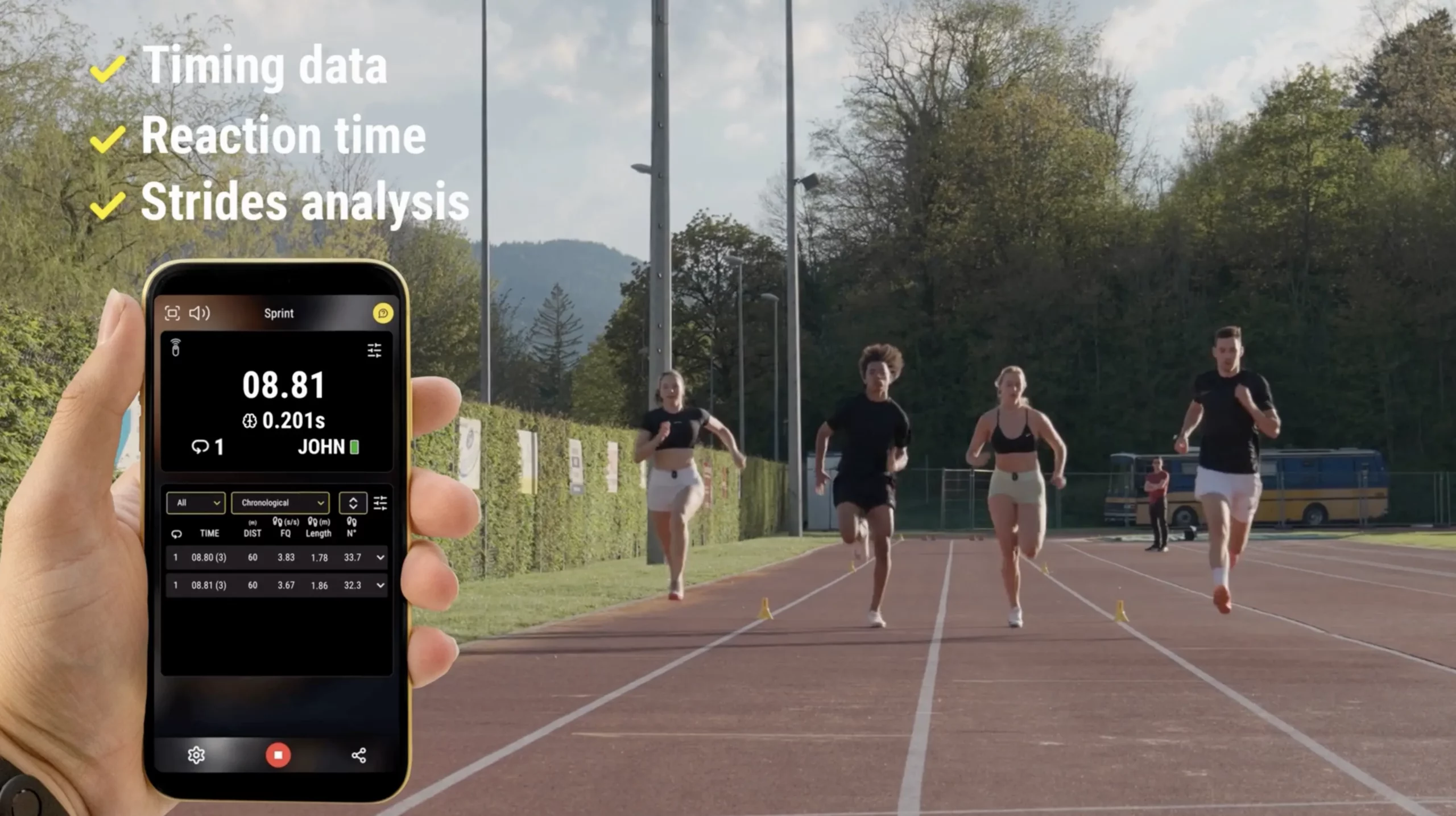
- The data is recorded instantly, without a button, without a laser beam and without approximation.
The result : a system that is quick to set up, reliable in the field and accurate enough to guide daily speed work.
Why consistency matters more than perfection
In training, the priority is not to use a system reserved for major competitions. What matters is being able to repeat tests under the same conditions.
Same distance.
Same zone.
Same protocol.
Same type of feedback.
This consistency is what makes it possible to know whether an athlete is truly progressing. If the protocol keeps changing, or if the measurement system lacks stability, the data becomes difficult to interpret.
And if the data is fragile, the feedback is fragile too.
Use cases
Sprinters
The flying 30 m helps track the evolution of maximum speed throughout training blocks. It is especially useful when the goal is to improve top-end speed.
American football
This test helps analyze the high-speed portion of a sprint, especially for athletes who accelerate well but reach their speed limit too early.
Soccer and rugby
Combined with 10 m splits, the flying 30 m helps build a more complete sprint profile : acceleration, transition and maximum speed.
Strength and conditioning
For strength and conditioning coaches, this type of test helps verify whether the work done in the gym actually transfers to the field.
Conclusion
So, what is the best way to time a flying 30 m sprint ?
- Manual timing lacks accuracy.
- Laser timing gates are better, but remain sensitive to triggering errors.
- Photo finish is extremely precise, but not very realistic for everyday use.
- Chip-based systems like Freelap offer a good balance : accuracy, consistency, easy setup and use adapted to real training conditions.
- To track athletes’ progress with reliable data, you need a system designed to work every day, not only on test day.